Hiển thị các bài đăng có nhãn ASEAN green hotel award. Hiển thị tất cả bài đăng
Hiển thị các bài đăng có nhãn ASEAN green hotel award. Hiển thị tất cả bài đăng
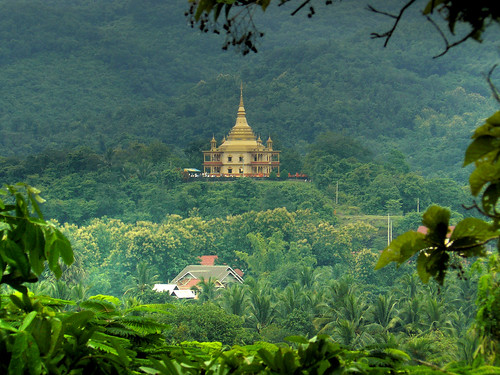
Wanderlust Travel Awards 2010 Top City
By Wanderlust team
Discover which city scooped top prize in this year's awards
Top city: Luang Prabang, Laos
Ranking %
1 Luang Prabang, Laos 94.74
2 Siena, Italy 94.67
3 Berlin, Germany 94.15
4 Seville, Spain 94.00
5 Kyoto, Japan 93.33
6 Melbourne, Australia 92.22
7 Boston, USA 91.85
8 Krakow, Poland 90.91
9 San Francisco, USA 90.53
10 Tallinn, Estonia 90.40
Right at home:
“Luang Prabang is one of those rare traveller towns where as soon as you arrive you feel right at home,” wrote reader Lucy Palmer of your perennial favourite city.
“Maybe it’s the languid pace of life instilled by the monks, maybe it’s just being in the shadow of those majestic temples; maybe it’s the presence of the mighty Mekong – but the whole place makes you slow down, forget any stress and just appreciate the environment around you. Yes, there are things to see and do, but that’s not the point. Luang Prabang is simply a great place to be.”
Despite its growing popularity, you told us the town retains those things that make it special: its colourful markets, French cuisine, outbreaks of drumming by the resident monks. And you recalled great local excursions – learning to be a mahout at an elephant centre (www.laos-adventures.com), gold-panning at a jungle ecolodge (www.kamulodge.com) and taking a boat trip to the Kuang Si waterfalls.
Even the frequent power cuts and lack of ATMs, concluded reader Charlotte West, “just seem to add to the charm of this one-of-a-kind place.”
Get there fast – then slow right down.
>>See the rest of Wanderlust Travel Awards 2010 winners here
The best city in the world 2010 goes to Luang Prabang in Laos

(KPL) The construction of Savanh Vegas Hotel and Casino Project in Savannakhet province is expected to be completed and operate in early September.
The statement was disclosed at a meeting between the Investment Promotion Department and the Chinese Sanum Investments Ltd, owner of the investment project, in Savannakhet province on 9 May. Savannakhet Governor Mr Vilayvanh Phomke was also on hand.
Commencing in late 2007, the construction made in the village of Nongdeun, Kaysone Phomvihane district, is now 70 per cent completed.
The developer of the project is also conducting a survey and preparation for a similar project in Paksong district, the southernmost province of Champassak.
The President of Sanum Investments Limited Benson Ko said early this month the investment projects in Savannakhet and Paksong, Champassak, were considered significant contribution to the national economic development. Both projects cost US$50 million with the government of Laos holding 20% of the shares.
Upon completion, Paksong-Vegas Project is expected to attract more foreign tourists, as it is considered the biggest five-star spa and resort in Asia.
Savan Vegas Hotel and Casino in Laos to open soon
Pi Mai rituals bring peace and fortune

The cool weather arriving after sunset in the World Heritage Town of Luang Prabang during Pi Mai Lao (Lao New Year) every year inspires people to put on their best clothes and visit local temples to sprinkle water on Buddha images.
Dressing in traditional clothes and washing Buddha images in the evening has long been a local custom. People believe visiting temples in wet clothes is inappropriate.
Celebrations not only take place in the city, but also in the surrounding suburbs, where traditional cultural activities occur.
Apart from numerous tourist attractions drawing visitors to the province, fascinating spectacles such as the Nangsangkhan (Miss Pi Mai) procession and the watering of Buddha images are a chance for visitors to observe local culture.
The watering of Buddha images during Pi Mai Lao is significant for Lao people, because this action is believed to wash away bad events from the past and bring luck and peace to families.
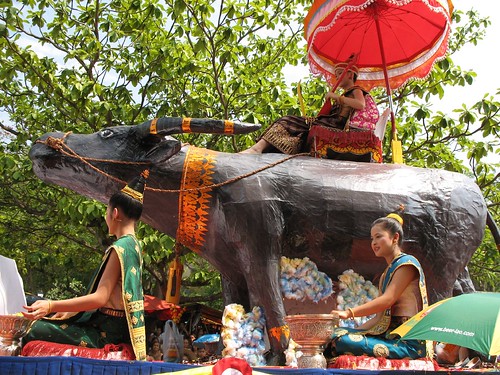
“In our province most people like to travel and enjoy time with families and friends during the day, while spending the cooler evenings at the temples taking part in rituals showing respect to Buddha images,” says Deputy Head of the Ministry of Information and Culture in Luang Prabang, Bounkhong Khutthoa.
Villagers here chose to visit temples in the evening because in the day they are busy, either travelling or working on their farms.
“Night-time activities are a delightful way for both locals and foreign visitors to celebrate the New Year. It is quite common to see people dressed up in their best attire to cleanse Buddha images in the traditional way. Now a lot of foreign visitors are joining in this longstanding practice,” Mr Bounkhong says.
When the sun goes down, young and old people alike begin heading to temples with the perfumed water they have prepared to sprinkle on the images in their local temples.
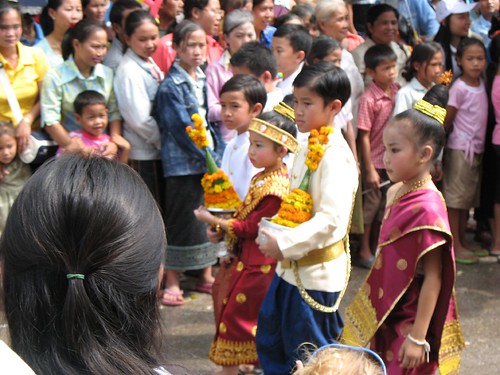
The highlight of this activity is the traditional style of clothing that everyone wears. The use of customary clothing, including a sash, adds to the devout atmosphere and demonstrates a respect for Lao culture.
This practice has been adhered to by people from generation to generation, as they believe that wearing wet clothes after a day of being soaked with water during other celebrations is inappropriate.
Although ceremonies differ slightly between provinces, the water used for temple rituals is similar across the country. It contains seasonal flowers and herbs such as dok champa (frangipani) and dokkhoun (a yellow tree blossom believed to be auspicious) . These trees are now in bloom all around the country. Sompoi , a fruit frequently used in cooking, khamin (turmeric) and perfumes are also added.
The water is stored in silver bowls. To show respect, shoes are not allowed nearby the altar where the images are placed for washing.
Small silver bowls are used to collect the water after it has being poured over the Buddha images. This is then trickled over the forehead of devotees, as the head is considered to be the holiest part of the body.
The remaining water is sprinkled around family homes to protect against evil spirits and bring good luck in the year to come.
Devotees perform this ritual in as many as nine to eleven temples, as it is believed to foster patience, perseverance, and success. It is recommended that people visit nine temples, as the number nine is considered to be lucky. Each temple devotee should visit a monk to be blessed and to have a white cotton string tied on their wrist.
Apart from this ritual, cultural and Buddhist ceremonies such as the building of sand stupas, singing traditional folk songs and candlelight processions are held in every temple.
Various traditional rituals are a drawcard for visitors from all over the world. Visitors will have a chance to experience the many traditional rites and customs that Luang Prabang has to offer over the New Year period.
Temples throughout Laos will perform Buddhist ceremonies, bringing out Buddha images to be washed by the faithful so they can purify themselves.
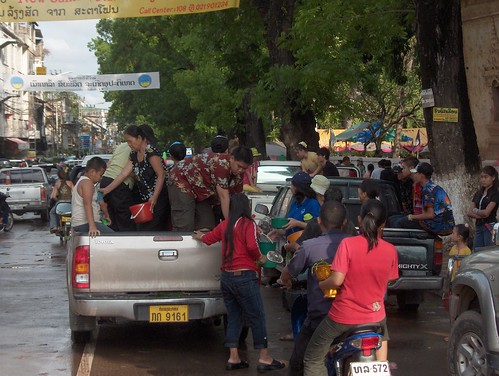
This year Sang khan luang (the first day of the Pi Mai Lao festival) falls on April 13. Homes, temples and public places are cleaned on this day. People also clean their bodies and think positively about the upcoming year.
Meu nau (the second day of the festival), sees the preparation of food and sweets to be offered to deceased relatives. It is thought that happiness and celebrations on this day will bring contentment throughout the year to come. It is believed that people should not sleep during this day.
The last day of the festival, Sa ng khan kheun , is the first day of the New Year when offerings are made to monks. Buddha images are washed and elders are sprinkled with water. On this day, visitors to Luang Prabang should take note to observe the columns and entrance ways to houses that people decorate with seasonal flowers, especially dokkhoun, as they believe it will bring good luck, prosperity and happiness.
By Phonesavanh Sangsomboun
Vientianetimes
The cool weather arriving after sunset in the World Heritage Town of Luang Prabang during Pi Mai Lao (Lao New Year) every year inspires people to put on their best clothes and visit local temples to sprinkle water on Buddha images.
Dressing in traditional clothes and washing Buddha images in the evening has long been a local custom. People believe visiting temples in wet clothes is inappropriate.
Celebrations not only take place in the city, but also in the surrounding suburbs, where traditional cultural activities occur.
Apart from numerous tourist attractions drawing visitors to the province, fascinating spectacles such as the Nangsangkhan (Miss Pi Mai) procession and the watering of Buddha images are a chance for visitors to observe local culture.
The watering of Buddha images during Pi Mai Lao is significant for Lao people, because this action is believed to wash away bad events from the past and bring luck and peace to families.
“In our province most people like to travel and enjoy time with families and friends during the day, while spending the cooler evenings at the temples taking part in rituals showing respect to Buddha images,” says Deputy Head of the Ministry of Information and Culture in Luang Prabang, Bounkhong Khutthoa.
Villagers here chose to visit temples in the evening because in the day they are busy, either travelling or working on their farms.
“Night-time activities are a delightful way for both locals and foreign visitors to celebrate the New Year. It is quite common to see people dressed up in their best attire to cleanse Buddha images in the traditional way. Now a lot of foreign visitors are joining in this longstanding practice,” Mr Bounkhong says.
When the sun goes down, young and old people alike begin heading to temples with the perfumed water they have prepared to sprinkle on the images in their local temples.
The highlight of this activity is the traditional style of clothing that everyone wears. The use of customary clothing, including a sash, adds to the devout atmosphere and demonstrates a respect for Lao culture.
This practice has been adhered to by people from generation to generation, as they believe that wearing wet clothes after a day of being soaked with water during other celebrations is inappropriate.
Although ceremonies differ slightly between provinces, the water used for temple rituals is similar across the country. It contains seasonal flowers and herbs such as dok champa (frangipani) and dokkhoun (a yellow tree blossom believed to be auspicious) . These trees are now in bloom all around the country. Sompoi , a fruit frequently used in cooking, khamin (turmeric) and perfumes are also added.
The water is stored in silver bowls. To show respect, shoes are not allowed nearby the altar where the images are placed for washing.
Small silver bowls are used to collect the water after it has being poured over the Buddha images. This is then trickled over the forehead of devotees, as the head is considered to be the holiest part of the body.
The remaining water is sprinkled around family homes to protect against evil spirits and bring good luck in the year to come.
Devotees perform this ritual in as many as nine to eleven temples, as it is believed to foster patience, perseverance, and success. It is recommended that people visit nine temples, as the number nine is considered to be lucky. Each temple devotee should visit a monk to be blessed and to have a white cotton string tied on their wrist.
Apart from this ritual, cultural and Buddhist ceremonies such as the building of sand stupas, singing traditional folk songs and candlelight processions are held in every temple.
Various traditional rituals are a drawcard for visitors from all over the world. Visitors will have a chance to experience the many traditional rites and customs that Luang Prabang has to offer over the New Year period.
Temples throughout Laos will perform Buddhist ceremonies, bringing out Buddha images to be washed by the faithful so they can purify themselves.
This year Sang khan luang (the first day of the Pi Mai Lao festival) falls on April 13. Homes, temples and public places are cleaned on this day. People also clean their bodies and think positively about the upcoming year.
Meu nau (the second day of the festival), sees the preparation of food and sweets to be offered to deceased relatives. It is thought that happiness and celebrations on this day will bring contentment throughout the year to come. It is believed that people should not sleep during this day.
The last day of the festival, Sa ng khan kheun , is the first day of the New Year when offerings are made to monks. Buddha images are washed and elders are sprinkled with water. On this day, visitors to Luang Prabang should take note to observe the columns and entrance ways to houses that people decorate with seasonal flowers, especially dokkhoun, as they believe it will bring good luck, prosperity and happiness.
By Phonesavanh Sangsomboun
Vientianetimes
Highlight of Lao New Year Festival
The Ten hotels from Laos are among 81 hotels from Asean countries honoured with the Asean Green Hotel Award. There are
1. Donchan Palace Hotel
2. Lao Plaza Hotel
3. Novotel Hotel
4. Settha Palace Hotel
5. Taipan Hotel
6. Green Park Boutique Hotel
7. Phouvao Hotel
8. Souvannaphoum Hotel
9. The Grand Hotel
10.Champasak Palace Hotel.
Cambodia, Indonesia, Myanmar, Singapore, Thailand and Vietnam have 10 hotels each in the category, the Philippines and Malaysia each in five and Brunei one.
The Asean Green Hotel Award to the 81 selected hotels were presented at the Asean Tourism Ministers’ meeting on January 22 in Bangkok by Asean secretary-general Dr. Surin Pitsuwan, which was also attended by Laos's Tourism Minister Somphong Mongkhonvilay.
The ward for hotels is only fi rst step, Asean look now to award restaurants and souvenir shops, Green Award Recognition is also of great virtue for travelers.
Source: Mlao
Ten hotels from Laos won ASEAN Green Hotel Award
Đăng ký:
Bài đăng
(
Atom
)
.jpg)


