Hiển thị các bài đăng có nhãn information. Hiển thị tất cả bài đăng
Hiển thị các bài đăng có nhãn information. Hiển thị tất cả bài đăng
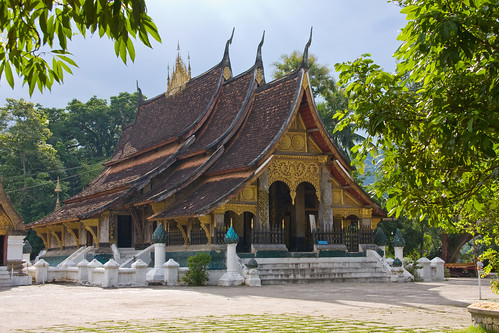
The Sydney Morning Herald describes Laos as the cheapest travel destination in Asia. It’s described as “living-like-a-king-on-the-cost-of-a-packet-of-chips-a-day" !
If you've already been to South-East Asia, you won't need me to tell you how great it is (although bear with me, I have to bang on about it for a second to everyone else).
The place has got pretty much anything you could want in a travel destination, save for maybe some snow.
For starters, it's extremely affordable, particularly now with the number of budget carriers flying there. And when you're there, things range from the cheap (Malaysia, Singapore), to the really cheap (Thailand), to the extremely cheap (Vietnam), to the ridiculously cheap (Cambodia) to the I'm-living-like-a-king-on-the-cost-of-a-packet-of-chips-a-day cheap (Laos).
To read more click HERE >>
Sydney Morning Herald ranks Laos as the cheapest destination 2009
The tourism sector in Bokeo province will undertake three development projects to attract visitors to stay longer in the province in coming years.
The tourism department will develop a hot spring and create tourist villages in Tonpheung district in the north of the province, an area that forms part of the Golden Triangle between Laos , Thailand and Myanmar .
Department Director, Mr Vanthong Chittakoun, this week said the department also planned to organise tourist activities including camping and kayaking in the Nam Nhon river in Houayxai district.
Other plans for the area include eco-tourism development in the area of Phouxifa mountain in Paktha district. The main tourist activities there will include rock climbing, camping and trekking.
Mr Vanthong said the Asian Development Bank had agreed to provide financial support and he expected the projects to begin in 2009.
Bokeo currently serves as a gateway for tourists who are travelling across the Mekong River to or from Chiang Rai province in Thailand .
“Of all the tourists who come to the province 80 percent of them will get on a boat and go to other provinces,” Mr Vanthong said.
A lot of tourists visit Bokeo, but most of them do not stay there because of the lack of tourist facilities. The city is currently just a transit route for visitors on their way to places such as Luang Namtha and Luang Prabang provinces, and Pakbaeng district of Oudomxay province.
A guesthouse manager in Houayxai district told Vientiane Times that many of his guests arrived via the Mekong River from Thailand and most stayed for only one night.
Bokeo has a lot of attractive tourist sites such as the Nam Nhon waterfall, hot springs and hill villages, but few of them have been developed or promoted.
Mr Vanthong said the province currently had few visitor attractions, although there was a nature tourism site in the Namkan conservation area, managed by a French investor.
This site is about 80km from the province's capital city Houayxai.
Another attraction is Donxao island in Tonpheung district, which is about 50km from the provincial capital. Many of the tourists who cross the Mekong River at Chiang Saen in Chiang Rai province stop at the island to buy souvenirs and handmade products.
More than 88,000 tourists have visited the province this year, an increase from the 20,000 visitors last year, according to statistics from the provincial tourism sector.
Vientianetimes
Bokeo plans to attract more tourists !
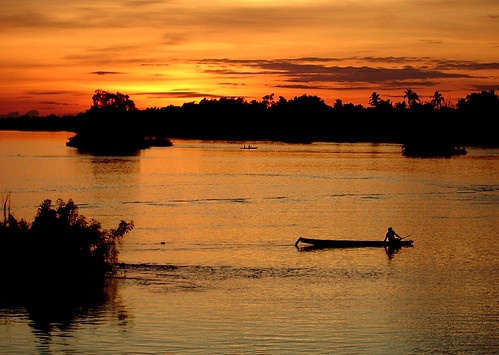
When Laos began to truly open to tourism in the early 1990’s, visitors focused on the cultural riches of Luang Prabang in the north, and the southern regions remained for a long time a destination for the more adventurous travelers. But this is changing fast. With the remarkable improvement of road networks around the whole of Indochina, Champasak has become the center of a new buoyant backpacking scene commuting overland in luxurious sleeper buses between Vientiane and Phnom Penh. And with a bridge crossing over the Mekong that links Thailand and Vietnam along the east-west axis, getting across borders is now much easier.
Sand Bar Islands
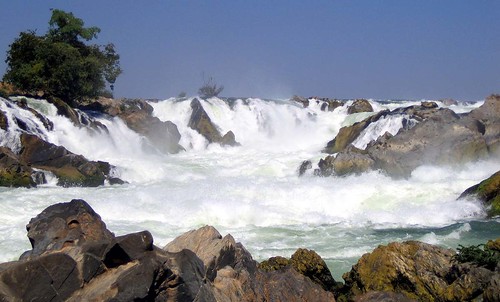
Mention visiting an island in Laos and one will most likely meet with a perplexed gaze. The very idea of islands in Southeast Asia is so indubitably linked to visions of white sandy beaches, that it simply cannot fit Laos, a largely mountainous country with no direct access to the sea. But rivers too can harbour islands, and in the case of Laos, one has to take into account that the Mekong isn’t just any ordinary river. It is one of the longest rivers in the world, and the possibility of it giving rise to islands shouldn’t be regarded as impossible. However, the Lao name Si Phan Don, or Four Thousand Islands, that was bestowed on the lush and scenic Champasak province in Southernmost Laos is a little superlative, if not far-fetched. To meet with such an incredible number of islands, one has to take into account every single sand bar that emerges out at the peak of the dry season. That said, there are indeed a good number of islands inhabited all year round, the largest of which, Don Khone, measures no less than four-by-eight kilometers. At the height of the rainy season, some parts of the Mekong in Si Phan Don can span over 12 kilometers. This is also where the river suddenly drops in altitude, resulting in the formation of a few majestic waterfalls that have prevented thorough commercial use of the Mekong. One of these waterfalls, Khon Pha Pheng, is purpotedly the largest waterfall in Southeast Asia and, indeed, the impressive tumultuous flow of water stands as a stark reminder that the Mekong is also the 12th largest river of the world by volume.
The Two Dons
The islands of Si Phan Don are best explored by bicycle, cycling on sandy shaded paths across the forests or along the luxuriant river banks. Most activity takes place on the twin islands of Don Det and Don Khone, which are linked by a concrete bridge. This bridge was part of a train track built by the French to link Don Khone’s southernmost point and Don Det’s northern bank in an attempt to bypass the waterfalls and allow the transportation of goods on the Mekong. A short distance away from the bridge lies a rusting tiny locomotive that for many years commuted along the only railway track ever built in Laos. Don Det has attracted the younger segment of the backpacking scene, bringing a distinct hippy flavor to the place. Typical accommodations here take the form of hammocks hanging in the bungalows veranda, with a view over the river of course. The more comfortable accommodations are found in Don Khone. An interesting option is Sala Phae (Ban Khone Tai, Khong District, Champassak Province, +856-30-525 6390, +856-21-217 526, www. salaphae.salalao.com), which has floating raft rooms, where you can sleep in a large breezy room directly over the flow of the mighty river, watch the sunset from the veranda, and dip your feet in the cool water of the Mekong.
Pakse Crossroads
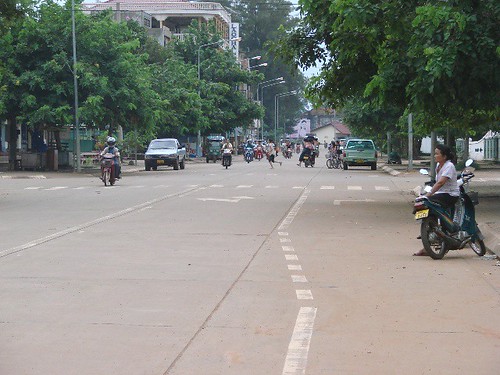
Si Phan Don, however, is only one of the many attractions that Champasak has to offer. The once sleepy little town of Pakse is right in the middle of the Indochina backpacker trail, and seems bent on becoming an important crossroad. In fact, judging by the number of luxury hotels under construction around town, Pakse has already become an attractive destination for a number of investors. Pakse too has its fair share of quaint colonial buildings from the turn of the 20th century which are an interesting combination of Art Deco and 1950’s architecture. Particularly arresting is a block of shophouses where one can see a clear chronological evolution of urban Southeast Asian architecture over the entire 20th century, from French colonial to 1990’s Post-Modern and Neo-Classical styles. And, with a scenic location at the confluence of the Mekong and the Se Don River, Pakse is actually quite a pleasant place to visit.
The Bolaven Plateau
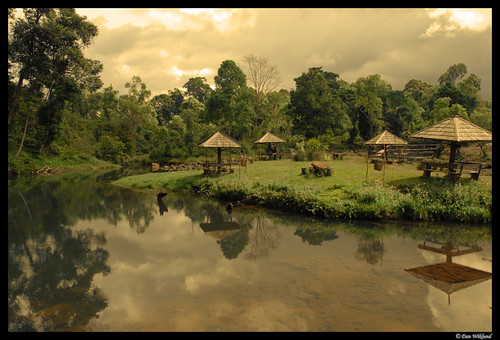
Just one hour north of Pakse, with an altitude of around 1,000 meters, the Bolaven plateau was put to good use by French planters to cultivate coffee and tea. Today, a large quantity of the production is exported, and is one of Laos’s most important sources of foreign trade. This is the place to find cool air and nature at its best. Ecotourism has become a catch word in Laos, heavily encouraged by local authorities, and the Bolaven plateau has a lot to offer. You can enjoy scenic rides across forests, coffee and tea plantations; hop from one pretty waterfall to the next, stop in hill tribe villages to buy intricate hand-woven textiles or take the obligatory elephant ride. More adventurous travelers can rent motorbikes to explore the plateau on their own. The Bolaven plateau also has a few atmospheric accommodation options to offer in the form of bungalows overlooking cool waterfalls.
The Ruins of Wat Phu
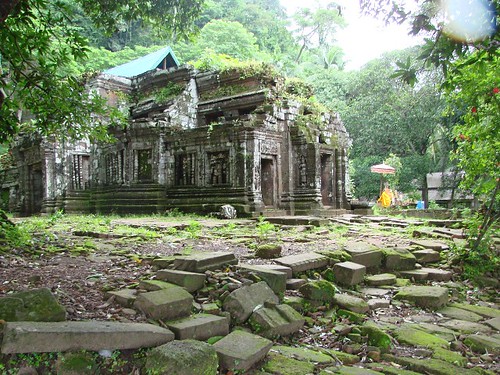
Champasak is home to one of the oldest Khmer sites in existence—the ruins of Wat Phu. The origin of this temple is found in the shape of the mountain at the foot of which the temple started taking shape in the fifth century CE. The summit, the Phu Kao, immediately commands ones attention because of its resemblance to a linga, Shiva’s phallic symbol. Phu Kao was believed to be a natural linga, a spontaneous manifestation of the Hindu god. At the foot of the mountain, fl owed a spring, around which the temple was built. Later in history, that spring was used to keep the linga of the sanctuary perpetually wet, a set-up apparently unique to the Khmer world. Wat Phu presents fine examples of Khmer sculpture and is best visited in the early morning when the frangipanis lining the staircase leading to the sanctuary pervade the air with their heavenly smell. In order to be there in time for sunrise, it is best to stay in the nearby little town of Champasak that gives its name to the province, which was previously the capital of a short-lived, 18th century kingdom that has lost most of its former glory. There are a few guesthouses of fairly good standard. The best and most romantic option is La Folie Lodge (Don Daeng, District Pathoumphone, BP 668, Champassak, Lao PDR., 856-534-7603, reservations@folie-laos.com), a resort complete with swimming pool overlooking the Mekong and finely decorated teak bungalows set in the lush greenery of the island of Don Daeng. As the whole of Indochine opens up ever more to tourism, there will be fewer and fewer places like Champasak left to explore. Go now.
Source: AziaCity.com
Champasak: Laos’s New Destination !
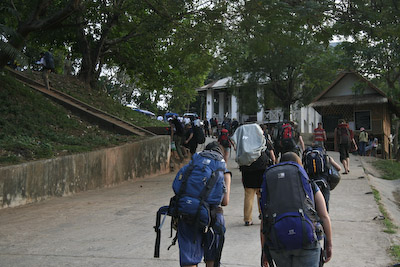
(KPL) A tourism information center was built recently in Parkbeng district with 287 million kip of government fund.
The center was considered as the main potential for attracting the tourist and helping them to save the time to looking for the tourist sites in the province.
In the first six months of 2007-2008 period, the Parkbang district has received 24,548 tourists, 1,140 of which was local tourists and 23,307 foreign tourists with able to create income about 6.137 billion kip.
To day, the Parkbeng district has one hotel, 2 resorts and 13 guesthouses with 216 rooms and 20 restaurants.
Tourism information center built in Pakbeng district, Laos
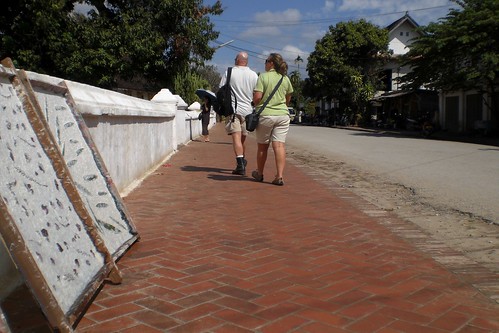
Laos is unique in that for a socialist country it has opened its doors to tourists. Since the latter part of the 1990s, Laos has been happy to welcome visitors from all over the globe. The reason behind their campaign to attract tourists, “Visit Laos” was because the economy was in a downward spiral and it was thought that tourism dollars would help to boost the economy. Lucky travelers can now experience the wonder of the sights and sounds of Laos.
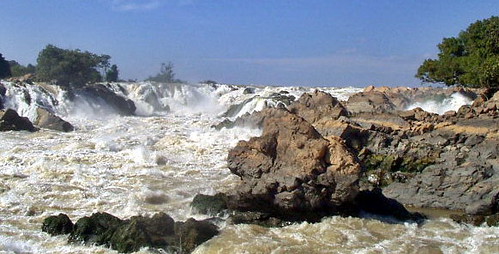
Khone Phapheng is the largest waterfall that can be found in Southeast Asia. Located at Si Phan Don at its southern end, it is also considered home to Irrawadaddy dolphins, a rare species. The waterfall is a stunning sight and the presence of the dolphins makes it even more so. Day trips for viewing the dolphins often include a visit to Khone Phapheng.
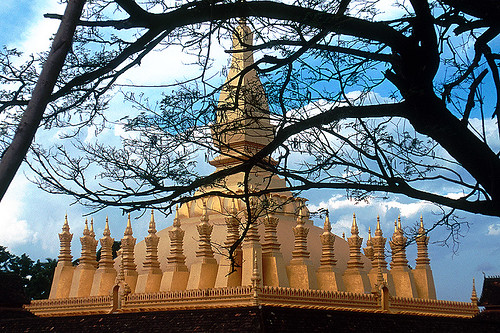
Another important sight in Laos is Pha That Luang. Not only is this monument important for its relation to the Buddhist religion, it is also a monumnet to the sovereignty of Laos. Looking upon it from a distance, it gives the impression of a cluster of gilded missiles. In the early part of November, the temple is the location of one of Laos’ major festivals.

Pak Ou Caves can only be reached by boat and one can be caught at Ban Pak Ou. It is a spectacular sight as the setting is carved into a cliff made of limestone that faces the river. Inside the cave there are a plethora of images of Buddha in every style and shape, but many of them represent the classic standing Buddha, Luang Prabang. Tours are easily arranged by tour operators as well as many of Laos’ guest houses.
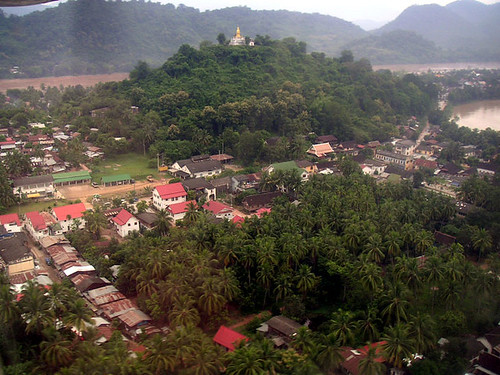
Other popular places to visit in Laos are the cities of Vientiane and Luang Prabang. Luang Prabang was given the distinction of being honored as a Unesco World Heritage city for its stunning, tranquil natural surroundings as well as its unique and beautiful architecture. This city is one of the top tourist destinations in Laos.
Source: www.traveling-blog.com
The Sights and Sounds of Laos
Vientiane residents to enjoy Lao New Year on islands
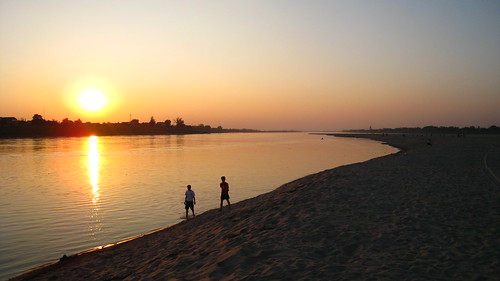
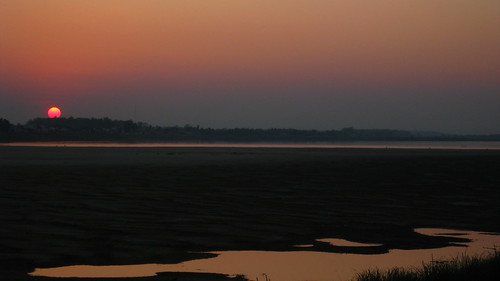
Photo: Sunset at Don Chan
Don Chan and Nongda islands will be two main areas of Vientiane where residents can enjoy Lao New Year celebrations, according to Vientiane Police Headquarters Chief Colonel Sihoun Sithiluexay.
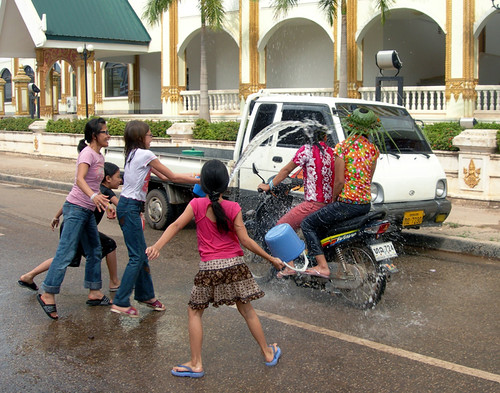
Colonel Sihoun said sport, water games and entertainment would be provided at the two sites during the traditional water festival.
“Today, Don Chan island is opening for sporting activities,” he said.
“We hope all Vientiane residents and foreign visitors will enjoy our traditional festival from April 13 to 15. Meanwhile, we also hope they will play safely and in a socially acceptable way by following our regulations and suggestions.”
He said his police would work with soldiers and local authorities in the three districts of Chanthabouly, Sikhottabong and Sisattanak in order to follow the regulations.
“Officials and local authorities are not the only ones who need to work during Pi Mai Lao, local people also have to be alert to security by keeping their eyes open for theft, fire or accidents,” he stressed.
Colonel Sihoun said the other districts in Vientiane would have their own taskforces to address security and to allow local people to enjoy the traditional customs of Laos at their local places of ce lebration.
Colonel Sihoun said his taskforce would encourage all staff to work hard to educate the public about following the Pi Mai Lao regulations issued by the Vientiane Administration Office.
The regulations ban carrying tanks of water on vehicles, throwing coloured or dirty water and plastic bags filled with water, and pouring water over motorbike riders, he added
“We mostly worry about road accidents because they increase considerably during the three days of celebration, compared to a normal week,” he said.
“There are usually about 50 accidents reported each week, but this same number usually occurs during the three days of the festival.”
Because accidents are a major problem every Pi Mai Lao, traffic police will be extra vigilant about stopping drunk drivers and preventing motorbike racing.
Last year the Vientiane traffic police reported 45 road accidents during the festival, including two fatalities.
From January to March this year there have already been almost 600 road accidents in Vientiane , claiming the lives of 20 people, Vientiane Traffic Police and Fire Fighting Division Chief Lieutenant Colonel Khamphew Vatthanaphone said earlier this month.
By Panyasith Thammavongsa
Source: vientianetimes
Photo: Sunset at Don Chan
Don Chan and Nongda islands will be two main areas of Vientiane where residents can enjoy Lao New Year celebrations, according to Vientiane Police Headquarters Chief Colonel Sihoun Sithiluexay.
Colonel Sihoun said sport, water games and entertainment would be provided at the two sites during the traditional water festival.
“Today, Don Chan island is opening for sporting activities,” he said.
“We hope all Vientiane residents and foreign visitors will enjoy our traditional festival from April 13 to 15. Meanwhile, we also hope they will play safely and in a socially acceptable way by following our regulations and suggestions.”
He said his police would work with soldiers and local authorities in the three districts of Chanthabouly, Sikhottabong and Sisattanak in order to follow the regulations.
“Officials and local authorities are not the only ones who need to work during Pi Mai Lao, local people also have to be alert to security by keeping their eyes open for theft, fire or accidents,” he stressed.
Colonel Sihoun said the other districts in Vientiane would have their own taskforces to address security and to allow local people to enjoy the traditional customs of Laos at their local places of ce lebration.
Colonel Sihoun said his taskforce would encourage all staff to work hard to educate the public about following the Pi Mai Lao regulations issued by the Vientiane Administration Office.
The regulations ban carrying tanks of water on vehicles, throwing coloured or dirty water and plastic bags filled with water, and pouring water over motorbike riders, he added
“We mostly worry about road accidents because they increase considerably during the three days of celebration, compared to a normal week,” he said.
“There are usually about 50 accidents reported each week, but this same number usually occurs during the three days of the festival.”
Because accidents are a major problem every Pi Mai Lao, traffic police will be extra vigilant about stopping drunk drivers and preventing motorbike racing.
Last year the Vientiane traffic police reported 45 road accidents during the festival, including two fatalities.
From January to March this year there have already been almost 600 road accidents in Vientiane , claiming the lives of 20 people, Vientiane Traffic Police and Fire Fighting Division Chief Lieutenant Colonel Khamphew Vatthanaphone said earlier this month.
By Panyasith Thammavongsa
Source: vientianetimes
Where to enjoy Lao New Year in Vientiane ? Find out here
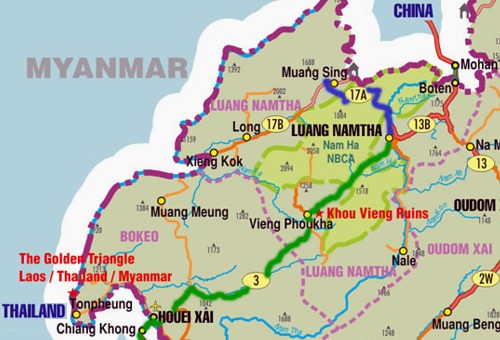
Luangnamtha is a northern province bordering on China and Myanmar and its selection is based upon a series of environment, social, cultural, historical and development factors which make the site an excellent location to evaluate the potential for sustainable cultural and ecotourism in an around a protected area. With a population of about 115,000, Luang Namtha is a home to at least forty different ethnic minority groups, including Hmong, Akha, Mien, Shan and Yunnanese. The forests are dense, and cover near 99% of the protected area. Wild cattle (gauar and banteng), Asian wild dogs, tigers, clouded leopard, bears and gibbons also having in the forests and there is still a large bird population. The province also consists of the lowland Lao, Tai Lue, Thai Neua and Thai Dam who live in village just outside the protected area and the historic town of Muang Sing.

Muang Sing originally formed part of group of principalities loosely linked under the leadership of political entity called the Sipsongpanna whose political seat centered in southern Yunnan province, China. Now, it’s become a most interested destination of tourists from around the world. Its full of guesthouses, resorts, restaurants served a standard service in low prices. Take pick up from Luang Nam Tha at 6:00 am to Meuang Sing at 8.30 am.
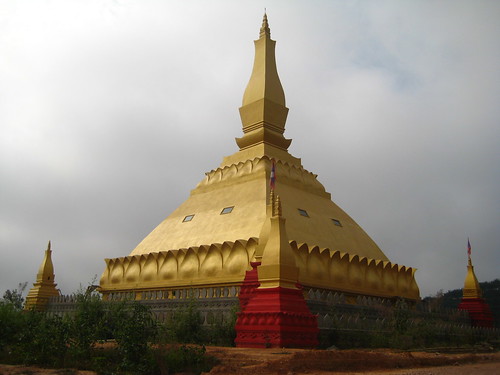
Photo: New stupa in Luang Namtha
This province has a picturesque beauty with mountains, and many old temples. Although they have been destroyed during the war, there still remains one major attraction and old temple noticeably different from other classical temples. Usually tour itinerary includes an outing to Boten, the Lao-Chinese border checkpoint. South West of Luang Namtha, the still pristine forests of Nam Ha protected area with varieties of wildlife and vegetation can be found.

Photo: Casino in Boten, Luang Namtha
Luang Namtha is also a gateway to neighboring China, and the city of Boten is now a legal border crossing for international tourists. Located near the Nam Tha River, the provincial capital city of Luang Namtha is a commercial center for trade between China, Thailand. Buy a locally produced textile or basket. Visit the town’s historical museum. Get up before sunrise to experience Muang Sing’s bustling morning market, where you will meet all sorts of people, including Thai Dam, Thai Neua, Hmong, Akha, and Yunnanese, buying and selling their produces.
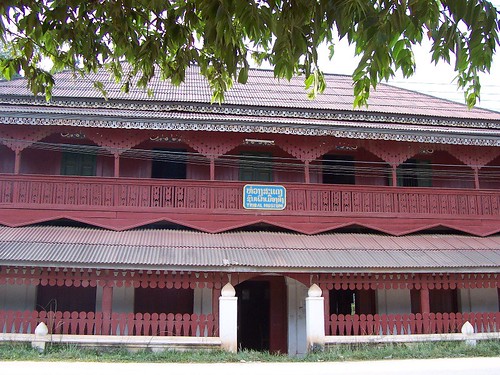
Photo: Tribal museum in Luang namtha
One of the best times to visit Muang Sing is in late October or mid-November, when the local people celebrate the festival of That Muang Sing, a grand stupa located just south of the city. Devoted worshippers pay their respects to the stupa with magical offerings of candles, flowers and incense. However, I want to suggest you that during this month you must take jacket with you all the time.

Photo: Tree house and gibbon experience
Getting there and Away
By air
Lao Aviation provides regular service between Vientiane and city of Luangnamtha, a trip of about one hour and ten minutes.
By road
There is regular bus service between the city of Luang Nam Tha and the transportation hub of Oudomxay, a trip of about five hours. But there is not direct bus from Vientiane to Luang Namtha.
By river
There is regular boat service on the Mekong River between Xieng Kok in Luang Nam Tha province and Xuay Xai in Bokeo Province.
Source: kpl
Visit Luang Namtha province, Northern Laos
 The Lao National Tourism Administration (LNTA) recently opened its new Tourist Information Centre in Vientiane. The Centre is open everyday from 8:30 – 16:00 and contains an exhibition on tourist attractions and activities available in the Lao PDR and neighboring countries. Visit the Centre for maps, transportation schedules, local advice on where to dine and where to stay as well as other essential information. This facility is located on the first floor of the LNTA headquarters on Lane Xang Avenue.
Tourist Information Centre in Vientiane
Đăng ký:
Bài đăng
(
Atom
)
.jpg)


