
A tourist hangs off a zip-line for a bird's eye view of the jungle. --Photo Laophoto
It may not be quite like Tarzan but swinging between the trees on a zip-line is now a new adventure for visitors to the Nam Lik Jungle Fly.
This activity has been set up in Senxoum village, Phonhong district, Vientiane province, and is about 70km north of Vientiane .
Open for the last few weeks before its official launch, the new adventure site has given visitors the thrilling experience of swinging through the treetops while securely attached to a long guide wire.
Owner of Nam Lik Jungle Fly and Chief Executive Officer of Green Discovery, Mr Inthy Deuansavanh, said yesterday “Our zip-line adventure stretches over a total length of 2km, with the zip-line section itself about 860 metres long and some enjoyable walks through lush green forest in between. We have 23 platforms on the trees at different levels, up to 37 metres high, and the lines are up to 180 metres long with stunning views over the forest.”
The zip-line is situated in 13 hectares of magnificent jungle and river scenery. At this stage most of the adventurers are brought in by companies and tour groups who also arrange kayaking, trekking and camping activities.
“We don't just run the business for profit - we also want to preserve the area's forest and biodiversity because this part of Senxoum village used to be exposed to illegal logging,” Mr Inthy said.
The adventure site currently has four main activities - kayaking, trekking, zip-line and camping – with elephant rides expected to be added in the near future. Resort accommodation is also planned and should be ready by the end of this year.
The zip-line took seven months to install, and is an important part of the project's ecotourism objectives.
Managing Director of Green Discovery, Mr Vianney Catteau, said 10 local guides have already been trained by an international specialist in outdoor sports. Local people are also being trained in hospitality skills such as cooking and other services for visitors. The project is helping to protect biodiversity in the area, where educators can also come to do research. The zip-line is not only fun but minimises the impact of visitors on the forest floor, prevents damage to vegetation, and provides access to the forest canopy which would otherwise be difficult for researchers to study.
“We are sure it will be a really exciting venture. And it's all close to Vientiane , on the way to Vangvieng district, just 15 km before Hinheup, so it's easy to reach. Everything has been designed to be environmentally friendly, taking care to minimise harm to the trees and other vegetation,” Mr Vianney said.
Visitors from Vangvieng district can travel south to the site by river, using kayaks that can be hired in Hinheup.
“We want to encourage both Lao and overseas visitors, and will offer reductions to domestic visitors to encourage them to get in touch with nature and help protect our forests,” he said.
T he site can be reached by driving from Vientiane for about 70km to Senxoum district on Road No. 13 north, followed by a right turn and a drive of about 7km to Nam Lik. Vehicles have to be left here before a 20-minute boat ride and a 30-minute trek to reach the camp site and zip-line. Along the zip-line, adventurers can enjoy views of the forest and the Nam Lik riverbank. The cost of a zip-line excursion is just under US$50, and is negotiable. Interested persons or companies who need more information can telephone 85620 6622001 or 85620 6622002.
The zip-line is the third to be constructed in Laos . The first is in Bokeo province and second is at the Tad Sae waterfall in Luang Prabang province.
By Panyasith Thammavongsa
Vientianetimes
Zip-line adventure awaits for you in Laos
Although Thailand is a very familiar destination , tourists have to note the following points to take a full tour of the country's Golden Temple
1 . Not too many people on a tuktuk
Tourists to Thailand are at least an attempt tuktuk , vehicles are featured here . Despite three wheeled vehicle moved by tuktuk but does not create a sense of security . Vehicles often come with high-speed , open cabin , there is no protection for occupants . The force , if visitors are not sticking very easy to fall off the car make . It is best to take a tuktuk only numbers from 2 to 3 people in a car . This way , nobody will fall when the streets are visiting .

2 . Do not step foot on the grass or hairy hands on the spot suspicious
Thailand is the country possesses the largest number of venomous snakes in the world. When to this country , you do not ever go on the lush lawn and place their hands on the suspicious holes in the ground , the bowl is sealed , water pipes ... That is often where snakes can hide lap.Theo statistics , every year thousands of people injured because of snake bites in Thailand . Be careful where you walk through and note where you put your hand up to avoid unfortunate accidents attacked by snakes .
3 . Do not swim in the river
The indigenous people can swim in the river and visit a particular suburb , you can also do like them . But should not imitate that do this because in some countries there are snakes and fish data , you can attack at any time . In some places , the water can not ensure that your toilet is easy to skin disease .

4 . Do not go far away to the deep south of Thailand
In recent years , southern Thailand bomb blasts and shootings by the extremist elements that many people were killed . Places like Hatyai , Yala , Songkhla warned unsafe for tourists and attention you need to stay away .
5 . Be careful with elephant game
Most travelers to Thailand want to give it a try and elephants . However, to ensure safe , you need to follow exactly the instructions of the mahout . More carefully , you should keep in mind that although trained but they are still wild animals . Therefore, our conversation suddenly lost control and ran toward someone that could happen .

6 . Avoid fraud
Thailand as well as any other developed country exist scams . If someone were to begin with you familiar with the proposal so attractive , friendly , need to be wary . Be careful with the car rental counter tutuk , because they are always trying to put a higher price . If you go to the Royal Palace in Thailand that someone " nice " to say that it is closed . Please ignore them and continue their trip because the Royal Palace never closed .
7 . If you see a sea backwards way suspicious , please run emergency
Sad figure of people killed by the tsunami in Thailand , which the world had to be painful . Therefore, if in Thailand , please pay attention to every move abnormality of the sea . The phenomenon of regression to the rear is a suspicious signs of a tsunami , an emergency run to the higher ground , as quickly as possible . This rare but not impossible.
8 . Be careful with the girls in bar
Each year, about 1,000 cases , tourists bring girls from the bar and woke up in a state does not have money , personal papers and other valuables . Do not drink the stuff the strange girl at the bar and do not invite them back to your accommodation . Be careful with these girls , because you do not know what the problem would have occurred .

9 . Do not try the drug,
Do not try stimulants , or medication to places selling drugs banned in Thailand . Law on Drug Prevention and stimulant in Thailand are very strict . Each year , about 1,000 foreigners must confront before Thai courts for cases related to amphetamines . In recent years , in large festivals like Full Moon Festival , the festival of the country Koh Pha Ngan is the police curfew closely the use of this type . Stay away from drugs and stimulants will make your trip safer than ever.
1 . Not too many people on a tuktuk
Tourists to Thailand are at least an attempt tuktuk , vehicles are featured here . Despite three wheeled vehicle moved by tuktuk but does not create a sense of security . Vehicles often come with high-speed , open cabin , there is no protection for occupants . The force , if visitors are not sticking very easy to fall off the car make . It is best to take a tuktuk only numbers from 2 to 3 people in a car . This way , nobody will fall when the streets are visiting .
2 . Do not step foot on the grass or hairy hands on the spot suspicious
Thailand is the country possesses the largest number of venomous snakes in the world. When to this country , you do not ever go on the lush lawn and place their hands on the suspicious holes in the ground , the bowl is sealed , water pipes ... That is often where snakes can hide lap.Theo statistics , every year thousands of people injured because of snake bites in Thailand . Be careful where you walk through and note where you put your hand up to avoid unfortunate accidents attacked by snakes .
3 . Do not swim in the river
The indigenous people can swim in the river and visit a particular suburb , you can also do like them . But should not imitate that do this because in some countries there are snakes and fish data , you can attack at any time . In some places , the water can not ensure that your toilet is easy to skin disease .
4 . Do not go far away to the deep south of Thailand
In recent years , southern Thailand bomb blasts and shootings by the extremist elements that many people were killed . Places like Hatyai , Yala , Songkhla warned unsafe for tourists and attention you need to stay away .
5 . Be careful with elephant game
Most travelers to Thailand want to give it a try and elephants . However, to ensure safe , you need to follow exactly the instructions of the mahout . More carefully , you should keep in mind that although trained but they are still wild animals . Therefore, our conversation suddenly lost control and ran toward someone that could happen .
6 . Avoid fraud
Thailand as well as any other developed country exist scams . If someone were to begin with you familiar with the proposal so attractive , friendly , need to be wary . Be careful with the car rental counter tutuk , because they are always trying to put a higher price . If you go to the Royal Palace in Thailand that someone " nice " to say that it is closed . Please ignore them and continue their trip because the Royal Palace never closed .
7 . If you see a sea backwards way suspicious , please run emergency
Sad figure of people killed by the tsunami in Thailand , which the world had to be painful . Therefore, if in Thailand , please pay attention to every move abnormality of the sea . The phenomenon of regression to the rear is a suspicious signs of a tsunami , an emergency run to the higher ground , as quickly as possible . This rare but not impossible.
8 . Be careful with the girls in bar
Each year, about 1,000 cases , tourists bring girls from the bar and woke up in a state does not have money , personal papers and other valuables . Do not drink the stuff the strange girl at the bar and do not invite them back to your accommodation . Be careful with these girls , because you do not know what the problem would have occurred .
9 . Do not try the drug,
Do not try stimulants , or medication to places selling drugs banned in Thailand . Law on Drug Prevention and stimulant in Thailand are very strict . Each year , about 1,000 foreigners must confront before Thai courts for cases related to amphetamines . In recent years , in large festivals like Full Moon Festival , the festival of the country Koh Pha Ngan is the police curfew closely the use of this type . Stay away from drugs and stimulants will make your trip safer than ever.
Travel Thailand, something be known!
Welcome to historic Angkor Cambodia ... or at least my virtual tour of it!
Angkor consists of dozens of temples and other structures, spread over a wide area, built between the 9th and 13th centuries by the mighty Khmer empire which, at the time, dominated southeast Asia.
Angkor Wat, seen here, is perhaps the largest and most impressive of the temples, but it is far from the only site worth seeing!
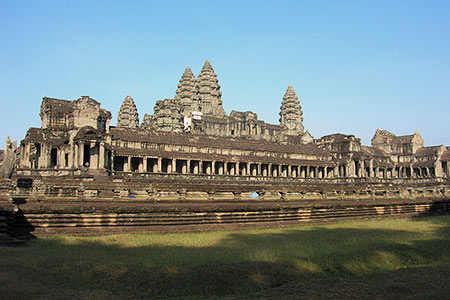
Angkor is a UNESCO World Heritage Site, and for buildings a thousand year old, the structures are amazingly well-preserved. The nearest town, only a few minutes away, is Siem Reap. Not surprisingly, the town has plenty of hotels and restaurants, many of which seem to have opened only in the last few years. Perhaps the easiest way to get here is via air. The small but modern Siem Reap airport has direct flights from a number of cities, including, conveniently, Bangkok, a
major regional hub.
major regional hub.

Angkor is a UNESCO World Heritage Site, and for buildings a thousand year old, the structures are amazingly well-preserved. The nearest town, only a few minutes away, is Siem Reap. Not surprisingly, the town has plenty of hotels and restaurants, many of which seem to have opened only in the last few years. Perhaps the easiest way to get here is via air. The small but modern Siem Reap airport has direct flights from a number of cities, including, conveniently, Bangkok, a
major regional hub.
major regional hub.

Most people visit Angkor for 1, 2, or 3 days. Passes to the Archeological Site are available for 1, 3, or 7 days. In one day, you can hit the main highlights. I'd recommend at least two days, though, which lets you see a lot more. There are a number of ways to tour the sites. An awful lot of folks visit here as part of group tours. Better, in my view, is to hire a car and driver for the day and go at your own pace. By Western standards, that option is remarkably cheap here, typically around $25 a day. Most, if not all, hotels can arrange it.

One of the most amazing things about Angkor are the beautiful and intricate carvings, which have survived surprisingly well over the last 1000 years! (I suppose it helps to be surrounded by jungle, not urban pollution.) It's useful to have a guide to point out some of the best carvings and explain the meanings. It costs about $25 a day to hire a guide, and the guides are all government trained and certified. (You can recognize them by their matching shirts with the official patch on the sleeve!) According to my guide, they have to go to school for two years to be certified.

It helps to be in good shape to visit Angkor. Many of the temples have very steep steps, and some of the best sites require a healthy uphill climb. According to my guide, the steps were made deliberately steep and narrow to force worshipers to ascend slowly, with proper respect.

It never hurts to remember to be careful! (I don't know what the health care is like in Angkor, but I wouldn't want to find out!)

The good thing is if you make it to the top of the steps, the views are very impressive. As we will see later, some of the best views at Angkor are not only from the tops of the temples, but also from the tops of hills where some of the temples are located.

Throughout Angkor, one sees many steles and walls covered with ancient writing. I have no idea what they say, but they certainly look impressive.

The temples of Angkor are a mix of Hindu and Buddhist. Every once in awhile you will find a little shrine that is still in use, like this one.

Although the temples today are of plain stone, in some places you can see hints of color, a sign that when they originally were built, these places were a lot more colorful and, thus, even more spectacular to behold.

Many of the carvings give you a good idea at what the Ancient Khmer's wore. If you want an even better idea, around some of the sites you will find entrepreneurial Cambodians dressed in ancient costumes. For a small fee, you can take their picture, or have your photo taken with them.

This is perhaps the most famous view of Angkor Wat, from the front with its reflection in the lotus pond. In the morning, when this was taken, the temple is somewhat backlit. The view is supposed to be even better in the afternoon, but that is also when the largest crowds arrive! Now it's time to leave Angkor Wat and move on to some of Angkor's other highlights.
Welcome to Ankor Wat, Cambodia
Omar Ali Saifuddien Mosque
The Omar Ali Saifuddien Mosque is dominates the city centre of Bandar Seri Begawan. It is one of the most magnificent mosques of South-East Asia, and a symbol of the strong Islamic faith of the people of Brunei.
The mosque was completed in 1958 and is named after the 28th Sultan, Omar Ali Saifuddien, who is still referred to as the architect of modern Brunei. The mosque's design reflects the use of the world's most elegant materials, including marble from Italy, granite from Shanghai, stained glass and chandeliers from England and carpets from Belgium and Saudi Arabia.
Located in a lagoon beside the mosque is a replica of a 16th Century mahligai barge, which was used to stage colourful religious ceremonies such as the Koran reading competitions during the 1960s and early 1970s. You will be required to remove your shoes prior to entering the mosque, and you should also be dressed conservatively.
The mosque is closed to non-muslims on Thursday. Access is restricted to late afternoon on Fridays
Kampung Ayer
Early European visitors to Brunei described Kampong Ayer, or Water Village, as the Venice of the East. Today, visitors continue to be fascinated by these traditional and historic houses built on stilts over the water, spanning the greater part of the Brunei River.
Kampoung Ayer is home to about 30000 people and is accessible by boat or by wooden bridges from Bandar Seri Begawan.
The houses in Kampung Ayer are joined be a maze of interconnecting timber walkways, and visitors are free to roam at their leisure. The government has provided every modern facility for the residents, including schools, clinics, police station and mosques. A visit to Brunei would not be complete without a trip to the this unique and intriguing place.
The Royal Regalia Building
The Royal Regalia Building is located in the heart of Banda Seri Begawan. It was built to commemorate the Silver Jubilee of the Sultan's accession to the throne in 1992. The museum is home to a collection of royal regalia, including the royal chariot, gold and silver ceremonial armoury, the jewel encrusted crowns used during the coronation and a replica of the throne, which is used by the Sultan on state occasions. There is also an exhibition which fully documents the history of the constitution of Brunei.
The building is open to the public every day of the week (on Friday the opening hours are shorter than the rest of the week) Shoes should be removed prior to entering the building.
Brunei History Centre
The Brunei History Centre was established in 1982. It was founded to undertake research into the rich history of Brunei. Among the areas of special interest are the genealogy and history of the Sultans of Brunei and the Royal family.
The centre located next to the Royal Regalia Building. It is closed on Friday.
Lapau and Dewan Majlis
Another magnificent building in the Bandar Seri Begawan is the Royal Ceremonial Hall, better known as the Lapau, where the present Sultan was crwoned on 01 August, 1968. An exquisite golden dome highlights the Lapau's interior. Traditional royal ceremonies are normally held here. Adjoining the Lapau is the Dewan Majlis, or Parliament House.
Tasek Recreational Park
This is one of the oldest recreational parks in the city. It has a natural waterfall and lake, and features a beautiful garden of trees and flowers. For those who want to get away from the noisy traffic of the city, this park is an ideal place to spend some time. It will take about 15 minutes to walk to the park from the Lapau. Brunei Shell, as part of their community work, has also installed an 8 metre high wall for those interested in climbing.
Tamu Kianggeh
The Tamu, or open air market, is situated on the banks of the Kianggeh River in central Bandar Seri Begawan. Here, one can find a wide variety of items including local dishes, fruit and vegetables, flowers and handicraft.
The Tamu is open every day from morning to late evening.
The Istana Nurul and Taman Persiaran Damuan
The most impressive site in Bandar Seri Begawan is the Sultan's Royal Palace, known as the Istana Nurul Iman. It is the largest residential palace in the world, and its golden domes, vaulted roof and riverside setting make it a spectacular subject for photographs. The palsce is open to the public only during Hari Raya, when residents and visitors alike have the opportunity to greet the Sultan and members of the Royal family.
The best view of the Istana is from Persiaran Damuan, which is a park along the river bank off Jalan Tutong. It has walkways, a well-equipped playground and features six outdoor sculptures by ASEAN artists, on the theme of Unity in Diversity. The Persiaran Damuan is popular for jogging and has several foodstalls in the evenings.
Yayasan Sultan Haji Hassanal Bolkiah Foundation Complex
Adjacent to the Omar Saifuddien Mosque stands an imposing addition to the skyline and waterfront. It is a commercial and shopping complex, designed to generate revenue for a foundation dedicated to the welfare of the people. It is a personal initiative of the Sultan, and is testament to his abiding concern for the well being of the people of Brunei. The complex is designed with an amalgamation of both the traditional Malay and modern architecture. Its main walkway features excellent views of the Omar Ali Saifuddien Mosque at one end and Kampung Ayer at the other.
The shopping complex, opened in July 1996, contains the largest selection of shopping facilities in Brunei. With the Yayasan Sultan Haji Hassanal Bolkiah Foundation Complex, Bandar Seri Begawan has created a completely new image of the city centre, making it a major tourist attraction.
Omar Saifuddien Mosque |
The mosque was completed in 1958 and is named after the 28th Sultan, Omar Ali Saifuddien, who is still referred to as the architect of modern Brunei. The mosque's design reflects the use of the world's most elegant materials, including marble from Italy, granite from Shanghai, stained glass and chandeliers from England and carpets from Belgium and Saudi Arabia.
Located in a lagoon beside the mosque is a replica of a 16th Century mahligai barge, which was used to stage colourful religious ceremonies such as the Koran reading competitions during the 1960s and early 1970s. You will be required to remove your shoes prior to entering the mosque, and you should also be dressed conservatively.
The mosque is closed to non-muslims on Thursday. Access is restricted to late afternoon on Fridays
Kampung Ayer
Kampong Ayr Water Village  |
Kampoung Ayer is home to about 30000 people and is accessible by boat or by wooden bridges from Bandar Seri Begawan.
On the "road" in the Water Village  |
The Royal Regalia Building
Armoury Display in the Royal Regalia  |
The building is open to the public every day of the week (on Friday the opening hours are shorter than the rest of the week) Shoes should be removed prior to entering the building.
Brunei History Centre
The Brunei History Centre was established in 1982. It was founded to undertake research into the rich history of Brunei. Among the areas of special interest are the genealogy and history of the Sultans of Brunei and the Royal family.
The centre located next to the Royal Regalia Building. It is closed on Friday.
Lapau and Dewan Majlis
Another magnificent building in the Bandar Seri Begawan is the Royal Ceremonial Hall, better known as the Lapau, where the present Sultan was crwoned on 01 August, 1968. An exquisite golden dome highlights the Lapau's interior. Traditional royal ceremonies are normally held here. Adjoining the Lapau is the Dewan Majlis, or Parliament House.
Tasek Recreational Park
This is one of the oldest recreational parks in the city. It has a natural waterfall and lake, and features a beautiful garden of trees and flowers. For those who want to get away from the noisy traffic of the city, this park is an ideal place to spend some time. It will take about 15 minutes to walk to the park from the Lapau. Brunei Shell, as part of their community work, has also installed an 8 metre high wall for those interested in climbing.
Tamu Kianggeh
The Tamu, or open air market, is situated on the banks of the Kianggeh River in central Bandar Seri Begawan. Here, one can find a wide variety of items including local dishes, fruit and vegetables, flowers and handicraft.
The Tamu is open every day from morning to late evening.
The Istana Nurul and Taman Persiaran Damuan
The most impressive site in Bandar Seri Begawan is the Sultan's Royal Palace, known as the Istana Nurul Iman. It is the largest residential palace in the world, and its golden domes, vaulted roof and riverside setting make it a spectacular subject for photographs. The palsce is open to the public only during Hari Raya, when residents and visitors alike have the opportunity to greet the Sultan and members of the Royal family.
The Royal Yacht - Tits |
The best view of the Istana is from Persiaran Damuan, which is a park along the river bank off Jalan Tutong. It has walkways, a well-equipped playground and features six outdoor sculptures by ASEAN artists, on the theme of Unity in Diversity. The Persiaran Damuan is popular for jogging and has several foodstalls in the evenings.
Yayasan Sultan Haji Hassanal Bolkiah Foundation Complex
Adjacent to the Omar Saifuddien Mosque stands an imposing addition to the skyline and waterfront. It is a commercial and shopping complex, designed to generate revenue for a foundation dedicated to the welfare of the people. It is a personal initiative of the Sultan, and is testament to his abiding concern for the well being of the people of Brunei. The complex is designed with an amalgamation of both the traditional Malay and modern architecture. Its main walkway features excellent views of the Omar Ali Saifuddien Mosque at one end and Kampung Ayer at the other.
The shopping complex, opened in July 1996, contains the largest selection of shopping facilities in Brunei. With the Yayasan Sultan Haji Hassanal Bolkiah Foundation Complex, Bandar Seri Begawan has created a completely new image of the city centre, making it a major tourist attraction.
BRUNEI-MUARA DISTRICT
Kalimantan forms the largest part of the island of Borneo is divided into four main regions:
- South Kalimantan (Kalimantan Selatan)
- West Kalimantan (Kalimantan Barat)
- East Kalimantan (Kalimantan Timur) and
- Central Kalimantan (Kalimantan Tengah - often referred to as Kalteng)
Refer to our section on Indonesian Visas for passport and entry visa requirements.Floating Market - Banjarmasin
Monkeys at the Chinese Temple
on Kembang IslandDiamond Mining in CempakaBamboo Rafting on the Amandit River
Kapuas River in PontianakIstana Kadriyah Sultan's Palace
Saham Village BetangPasir Panjang Beach at Singkawang
A Black OrchidHouses on the Mahakam River near Samarinda
Market Scene in SamarindaA water fall in Tanah Merah Indah
Lamin house - the traditional house of
Dayak near TenggarongHouses on Lake Jempang at Tanjung IsuyFloating Houses on Mahakam River near MelakBlack Orchid found at Kersik Luway
View of Palangkaraya on the Kahayan RiverView of Pangkalanbun and the
Kuamai River


MAJESTIC KALIMANTAN
 Even though the recession has hampered exotic travel, there are still those intrepid explorers going all out. All this week, our Cambodian embed Claire will share experiences from her trip to Laos.
 Gentle, quiet Laos exceeds all expectations, from its limestone mountains to meandering rivers and ethnic minority villagers whose outfits are so intricate and lovely they could pass as a winter collection at Fashion Week in Bryant Park. And Laos’ appeal comes without the drawbacks of traveling through its neighbor countries—Vietnam has too many tourists, double goes for Thailand, and the charm of Cambodia’s underdevelopment and unpaved roads wears thin after a 12-hour minibus ride with 18 butts to 10 seats.
Recently I traveled the length of the country, flying to Luang Prabang, then lacing south by bus toward Cambodia, stopping in Vang Vieng, Vientiane, Champasak, and Si Phan Don. This week, I will share tips on how to best explore Indochina's least-visited and loveliest country.
Though Laos remains the region's poorest and least populous country, it manages its tourism industry rather flawlessly. Outside the main tourist track, which extends from Luang Prabang in the north to Si Phan Don in the south, infrastructure deteriorates, but we noticed that national roads are a dream. Long-distance bus rides travel over smooth, paved roads, cost little, and sometimes come with fully horizontal, sleeper beds.
A one-way flight to Luang Prabang from Siem Reap, home to Angkor Wat, costed $150. There are also reasonably priced direct flights to both Luang Prabang, Vientiante, and Sovannakhet in Southern Laos from Malaysia, Thailand, and Vietnam. Kuala Lumpur’s AirAsia often has bargains to most Southeast Asia destinations, including $37 one-way flights to Vientiane, we discovered by searching for flights in September. We mean, how could we not?
Stay tuned tomorrow as Claire discovers the surprising Euro mood of Luang Prabang.
http://www.jaunted.com/story/2009/8/16/15644/1944/travel/Heading+To+Laos+To+Discover+The+Best+Of+Indochina
Heading To Laos To Discover The Best Of Indochina

(KPL) Luang Prabang, a UNESCO-listed world heritage town in northern Laos, has been ranked as a top-ten of the world?s best city, according to the latest survey of Travel+Leisure magazine.
The American magazine pointed out that Udaipur (a city in India?s Rajasthan state) was rated the first by the survey, and was followed by Cape Town in South Africa, Bangkok, Buenos Aires, Chiang Mai, Florence, Luang Prabang, New York, Rome and San Francisco.
According to the 14th annual World?s Best Awards given by the magazine www.travelandleisure.com/worldsbest/2009/, Luang Prabang, the ancient royal capital of Laos and the jewel of tourism of Laos and the region, is ranked the seventh.
In rating the cities, the survey, conducted during the first quarter of this year, took into consideration factors such as sights, culture/arts, restaurants/food, people, shopping and value.
Udaipur also known as the City of Lakes, is a city, a Municipal Council and the administrative headquarters of, the Udaipur district in the state of Rajasthan in western India. It is the historic capital of the former kingdom of Mewar in Rajputana Agency.
Top Cities Overall
Rank '08 Name Score
1 - Udaipur, India 87.94
2 3 Cape Town 87.69
3 1 Bangkok 86.80
4 2 Buenos Aires 86.22
5 - Chiang Mai , Thailand 86.18
6 5 Florence 85.61
7 - Luang Prabang , Laos 85.45
8 8 New York 84.65
9 7 Rome 84.63
10 10 San Francisco 84.53
11 4 Sydney 84.27
12 - Jaipur 84.14
13 - Oaxaca 84.01
14 9 Istanbul 83.90
15 - Fez 83.82
16 6 Cuzco 83.40
17 - Jerusalem 83.23
18 - Siem Reap 83.17
19 - Quebec City 83.05
20 - Kyoto 83.01
* "-" means that the property was not among the top-ranked in this category last year
Luang Prabang in top 10 world best cities 2009 by American magazine
Đăng ký:
Bài đăng
(
Atom
)
.jpg)


